Hey Teacher Friend!
Stop Fighting Student Behavior with Creative Engagement

By May, many elementary classrooms start to feel… wiggly.
Students are talking more, focusing less, and struggling to stay engaged. Teachers are repeating directions for what feels like the hundredth time before lunch, and honestly? Everyone is tired.
At this point in the year, it can feel like you’re managing behavior more than you’re actually teaching.
If that’s where you are right now, I want you to know something:
I know you’re a good teacher, but it doesn’t feel like it right now.
The good news is this: your students probably don’t need more reminders, stricter consequences, or another classroom management system. Often, they need opportunities to reconnect with learning in a more engaging, creative, and emotionally safe way.
That’s where creative engagement comes in.
Why Creativity Supports Behavior and Emotional Regulation
When we hear the word “creativity,” many of us picture elaborate art projects, messy supplies, or hours of prep work. However, creativity in the classroom is much bigger than that.
Creativity is:
- problem-solving
- flexible thinking
- curiosity
- imagination
- trying, revising, and reflecting
In other words, creativity is part of the learning process itself.
More importantly, creative engagement can directly support student behavior and emotional regulation because students are more likely to stay focused when they feel:
- connected,
- involved,
- successful,
- and emotionally invested in what they’re learning.
A disengaged student often becomes distracted, disruptive, or shut down. Meanwhile, engaged students are naturally participating in the learning experience instead of resisting it.
That doesn’t mean creativity magically “fixes” behavior. Still, it does help prevent many of the issues that come from boredom, frustration, and emotional disconnect.

The Creative Process Happens Everywhere
The other day, I had one of those real-life moments that perfectly reminded me how powerful the creative process actually is.
I was making dinner for my family when I discovered the main ingredient I planned to use had gone bad. Suddenly, I had to pivot quickly with hungry kids waiting and very little energy left in my tank.
So I started looking around the kitchen:
What ingredients DID I have?
What could work instead?
How could I make this meal come together anyway?
Without even thinking about it, I moved through the creative process:
- get inspired,
- imagine,
- create,
- reflect,
- and share.
That’s creativity.
Not perfection.
Not Pinterest.
Not performance.
Just problem-solving, flexibility, and learning in real time.
The same thing happens in our classrooms every day when students are given opportunities to think, wonder, try, revise, and contribute.
Creativity
is not an extra.
Why “Micro Engagement Strategies” Matter
One thing I talk about in this week’s podcast episode is the importance of what I call micro engagement strategies.
These aren’t giant lesson overhauls.
Instead, they are small moments woven into learning that help students:
- wake up their thinking,
- re-engage emotionally,
- participate more actively,
- and feel more connected to the classroom experience.
The reason these small shifts matter so much is because students’ brains crave:
- novelty,
- movement,
- ownership,
- creativity,
- and opportunities to think flexibly.
Especially this time of year.
As a result, even tiny moments of creative engagement can change the energy in a classroom.
Creativity Is Not “Extra”
One of the biggest mindset shifts I hope teachers take away from this conversation is this:
Creativity is not extra.
It’s not something we do only after the “real learning” is finished. Instead, creative engagement helps students access learning in the first place.
It also helps teaching feel lighter.
Because when students are actively engaged in learning, we spend less energy pulling them through it.
Inside the RESET Framework, one of the key steps is:
Engage with Creativity and the Arts
Not because we’re trying to entertain students every second, but because creativity helps create calm, connection, participation, and belonging.
And those things matter deeply for behavior support.
Want to learn more about the RESET Framework?
Download my free RESET Roadmap and see where creativity can take you!
Go to https://theinspiredclassroom.com/roadmap to download the PDF.
Get in on the Experience!
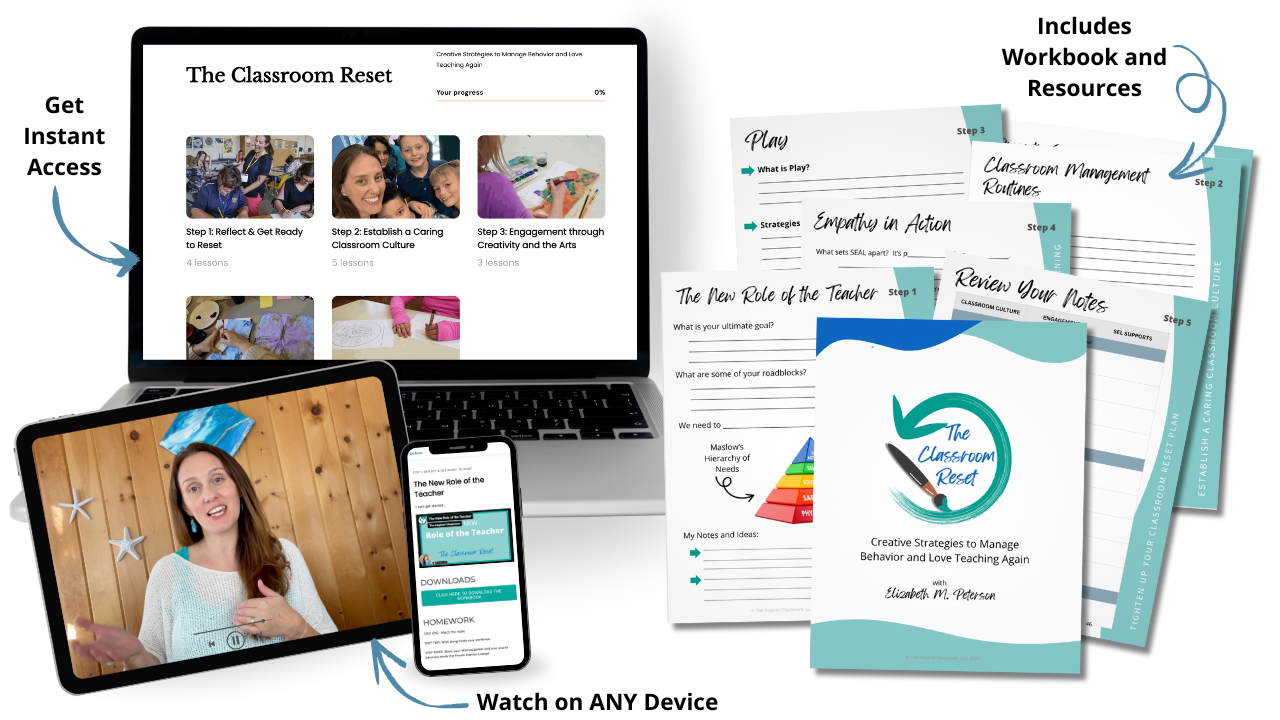
The Classroom Reset
The Classroom Reset is your fresh (RE)start—designed to bring calm, connection, and creativity back to your classroom in just 6 weeks!
This teacher-centered RESET course is designed to help you improve student behavior and take care of your own well-being—without adding more to your plate. Through the proven RESET Framework, you’ll rebuild classroom culture, re-engage students through creative strategies, and strengthen SEL so that teaching feels calm, connected and joyful again! With Personalized 1:1 Support and a group of fellow educators walking alongside you—you’ll finally feel confident, calm, and in control again. This isn’t just another training. It’s a true RESET Experience: for your students, your classroom and YOU.