Hey Teacher Friend!
Are you battling with student apathy in the classroom?
Have you ever caught yourself thinking, “My students just don’t care anymore.”
Maybe they won’t start their work. Maybe they complain about everything. Maybe they talk nonstop or put their heads down before the lesson even begins.

Many teachers right now are noticing an increase in student apathy in the classroom. It can feel discouraging—especially when you’ve put thought and energy into planning a meaningful lesson.
However, what if the issue isn’t that students don’t care?
More often than not, student apathy is actually a sign of disconnection.
When students feel disconnected—from the teacher, their classmates, or the learning itself—they naturally begin to disengage. Understanding that shift can make a big difference in how we respond as educators.
Why Student Apathy Happens
At first glance, student apathy can look like laziness or defiance. Yet when we look a little deeper, a different story often appears.
Students tend to disengage when they don’t feel:
-
Competent – The work feels too hard or embarrassing to attempt
-
Connected – They feel invisible or misunderstood
-
Significant – Their voice or effort doesn’t seem to matter
Because of this, many students protect themselves by opting out rather than risking failure.
Consequently, trying to “force” motivation rarely works. Extra worksheets, threats about grades, or public calling out can actually deepen the disconnection.
Instead, engagement tends to grow when we intentionally create opportunities for connection.
3 Ways to Reduce Student Apathy Through Connection
In the podcast episode, I share three places teachers can focus their energy when student apathy shows up in the classroom.

1. Connection With the Teacher
Students are far more likely to engage when they feel seen by the adult leading the room.
Small actions can make a surprising difference:
-
Greeting students at the door
-
Noticing effort instead of just correct answers
-
Checking in during independent work
-
Using students’ names in positive ways
These moments don’t take long, but they help students feel that they belong in the room.
And when students feel that sense of belonging, their willingness to participate often grows.

2. Connection With Classmates
Learning is naturally social. Even quiet students benefit from structured ways to interact with their peers.
However, partner work can feel intimidating for teachers when relationships in the classroom aren’t strong yet. If you’ve ever felt that hesitation, you might enjoy Episode 108: For Teachers Who Dread Partner Work: Let’s Talk Student Relationships, where I explore ways to make collaboration feel safer and more productive.
Simple strategies that build peer connection include:
-
Structured partner discussions
-
Turn-and-talk moments during lessons
-
Quick team challenges
-
Peer explanations of learning
These interactions help students feel that they’re learning with others rather than working in isolation.
Additionally, activities that build empathy and kindness can strengthen the overall classroom climate. In Episode 84: Promote Empathy and Kindness in the Classroom with this Formula, I share a simple framework teachers can use to nurture those important social-emotional skills.

3. Connection With the Content
Sometimes students disengage simply because they feel passive for too long.
If a lesson asks students to sit quietly and listen for extended periods, their brains will eventually look for stimulation elsewhere.
A helpful question to ask yourself is:
“Where in my lesson structure are students passive for too long?”
Even small shifts can re-energize learning. For example:
-
A quick call-and-response review question
-
A short creative challenge
-
A choice in how to show understanding
-
Movement or visual response activities
These moments help students interact with the content instead of just observing it.
A Simple Starting Point for Teachers
If student apathy feels overwhelming right now, you don’t need to change everything at once.
Instead, try focusing on one small shift this week.
You might:
-
Add one structured partner conversation
-
Give students a quick success problem at the start of the lesson
-
Notice and acknowledge effort more intentionally
These small changes can begin to rebuild connection—and connection often leads to engagement.
Student
apathy
is often
a sign of
disconnection.
You Can Have Influence Over Student Apathy
Student apathy can feel discouraging, but it doesn’t mean students are unreachable.
More often than not, it simply means they’re disconnected—and connection can be rebuilt.
As teachers, we have more influence than we sometimes realize. Small shifts in how we structure our classrooms and interact with students can create meaningful change over time.
You don’t have to solve everything today. Just start with one moment of connection.
I hope this inspired you today.

When Student Apathy Continues
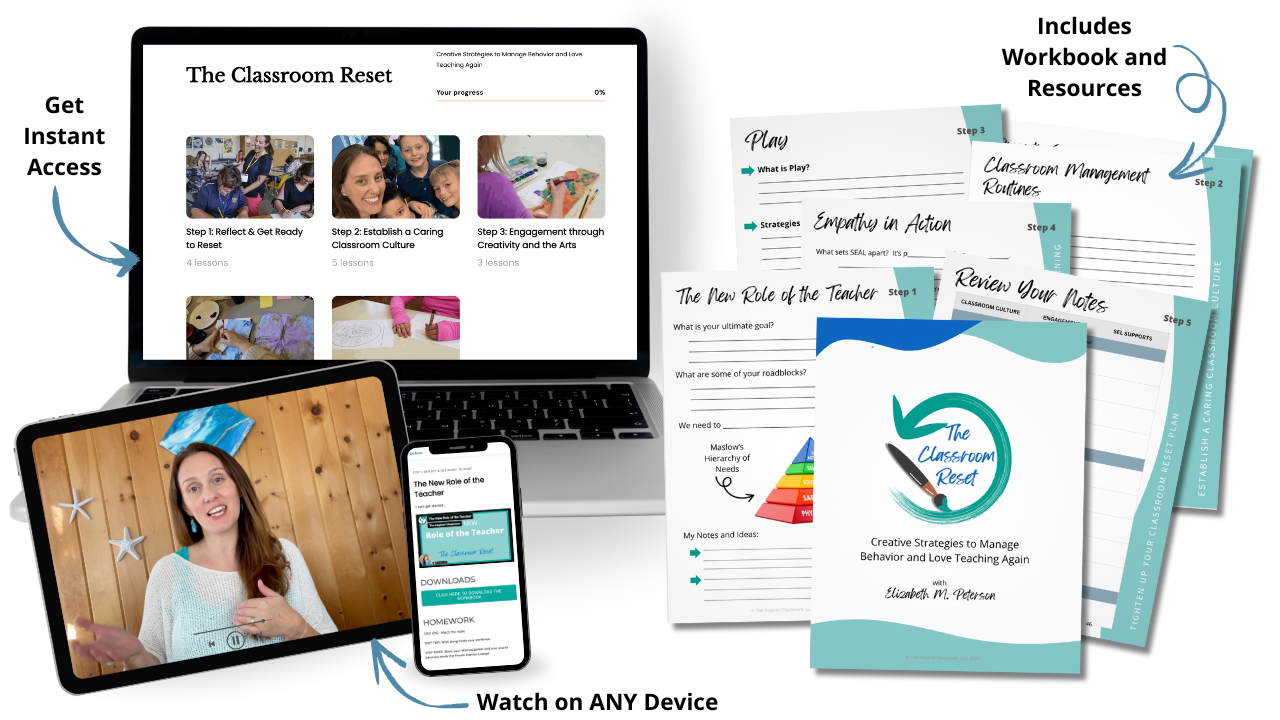
If you’d like more support creating calm, connected classrooms, you might enjoy exploring The Classroom RESET, where I help teachers who are battling student apathy in the classroom to build practical systems for engagement and social-emotional learning.
A classroom reset isn’t about adding more programs or complicated systems. Instead, it’s about intentionally rebuilding the foundation of classroom culture so behavior problems stop repeating week after week.
When teachers focus on culture, connection, and social-emotional learning alongside expectations, the classroom begins to feel calmer and more supportive for everyone.
And that’s when teaching becomes joyful again.
Get in on the Experience!
The Classroom Reset
The Classroom Reset is your fresh (RE)start—designed to bring calm, connection, and creativity back to your classroom in just 6 weeks!
This teacher-centered RESET course is designed to help you improve student behavior and take care of your own well-being—without adding more to your plate. Through the proven RESET Framework, you’ll rebuild classroom culture, re-engage students through creative strategies, and strengthen SEL so that teaching feels calm, connected and joyful again! With Personalized 1:1 Support and a group of fellow educators walking alongside you—you’ll finally feel confident, calm, and in control again. This isn’t just another training. It’s a true RESET Experience: for your students, your classroom and YOU.