Hey Teacher Friend!
Testing season has a way of changing things inside our classrooms.
Schedules shift.
Creative subjects get paused.
We feel the pressure to “fit it all in.”
And if we’re honest? Our students can feel it too.
If you’ve noticed more off-task behavior, emotional outbursts, or general restlessness this time of year, you are not imagining it. Testing season stress affects the nervous system — for teachers and students alike.
Let’s talk about why that matters… and what you can do about it.
What Is the Nervous System (And Why Should Teachers Care)?
The nervous system is essentially your body’s safety and alert system. It’s constantly asking:
-
Am I safe?
-
Do I need to be alert?
-
Or can I settle and focus?
When testing season ramps up, predictability often disappears. We rearrange schedules. We add more academic pressure. We rush.
And when routines disappear, kids lose their anchors.
The nervous system doesn’t love unpredictability. When it feels stressed, behavior shifts. That can look like:
-
Daydreaming
-
Fidgeting
-
Irritability
-
Shutdown
-
Difficulty focusing
This isn’t about motivation. It’s about regulation.
Understanding the nervous system gives us a powerful reframe: behavior is often a stress response, not a character flaw.
Why Testing Season Behavior Gets Worse
One of the biggest patterns I see during testing season is the curriculum rush.
We try to squeeze in extra math practice.
We shorten science or social studies.
We skip creative time “just for now.”
But here’s the problem.
Creativity, movement, and predictable routines are often the very things helping students regulate their nervous systems.
When we remove those supports during the most stressful season of the year, behavior can escalate.
It’s not that students suddenly “forget how to behave.”
It’s that their nervous systems are working overtime.
That’s why I believe so strongly in this phrase:
Practice
the skill
before you
need it!
3 Simple Regulation Strategies to Use Before Testing Season Peaks
The goal isn’t to overhaul your classroom. It’s to build small, predictable anchors that support calm and focus.
Here are three simple ways to support nervous system regulation in your classroom.

1. Two Minutes of Drawing Before Academic Blocks
Even a short burst of free drawing — on whiteboards, scrap paper, or Post-its — can help students transition between activities.
Drawing gives the brain a gentle reset. It can calm overstimulation and reduce off-task behavior before it begins.
Think of it as prevention, not a reward.
2. Use Music Intentionally to Support Focus
The environment shapes the nervous system more than we realize.
When I reintroduce calm, consistent music into my classroom after a few days without it, the shift is noticeable. The room feels steadier. More focused.
Sound can signal safety and predictability. Over time, students begin to associate certain types of music with focus and calm.
It’s a simple change that can dramatically affect classroom atmosphere during high-stress seasons.
3. Practice Stretching and Breathing Before You “Need” It
Stretching and breathing exercises are not extras. They are regulation tools.
Instead of waiting for test day, build small, predictable movement or breathing routines into your week. Even 2–3 minutes makes a difference.
Better yet, let your class help create a simple stretch routine they can use before independent work or testing.
When stress hits, the body goes back to what it has practiced.

Calm Is Something We Practice
Testing season doesn’t require stricter control. It requires intentional regulation.
We can’t demand focus under pressure if we haven’t practiced calm during ordinary days.
Small shifts — consistent music, brief drawing time, predictable movement — can change the emotional tone of your classroom.
And when your classroom feels steady, behavior improves naturally.
If you’d like to go a little deeper into the nervous system and hear the full story behind these strategies, I invite you to listen to this week’s podcast episode.
Because when we practice regulation before we need it, everything changes.
Ready for a Bigger Reset?
If this resonates with you — if you’re realizing that classroom calm is something that needs to be intentionally built — I want to invite you to take the next step.
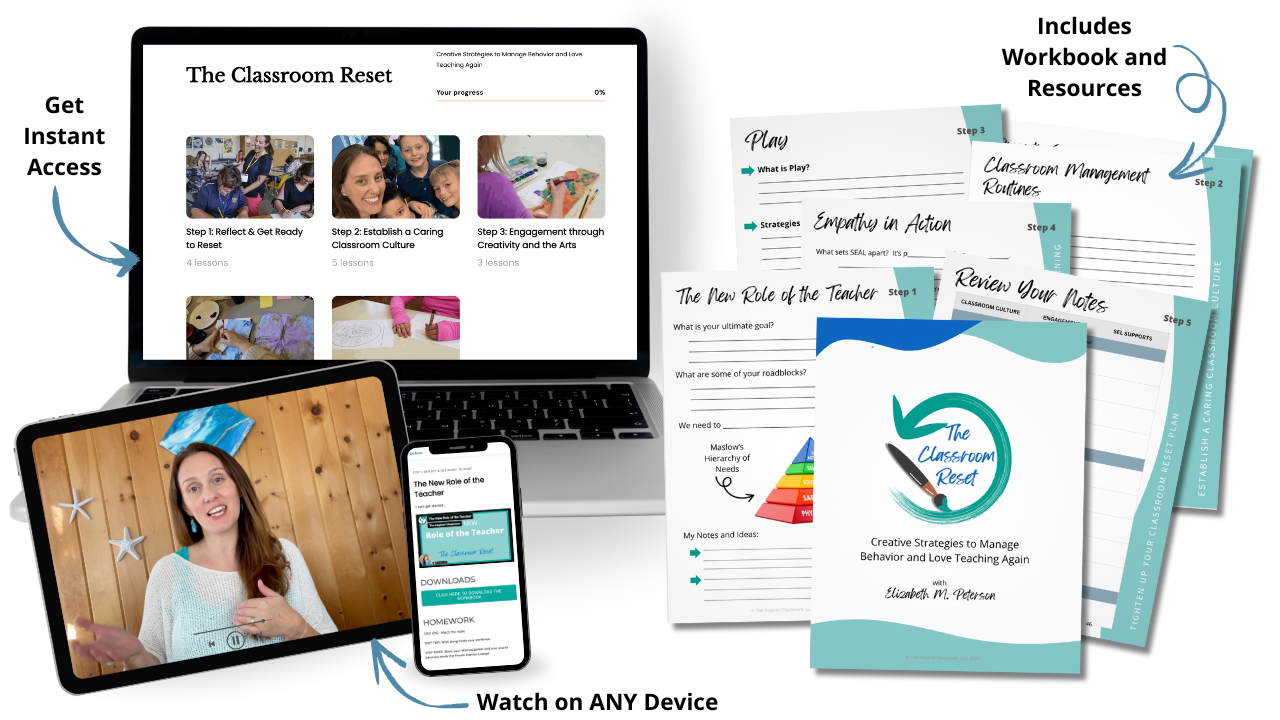
Inside The Classroom RESET, we look at routines, regulation, transitions, and teacher stress in a structured, supportive way. You don’t need another new initiative, you need a RESET!
You can learn more here:
👉 theinspiredclassroom.com/reset
You are already doing meaningful work. Let’s make sure you have a classroom that feels calm and supported.
I hope this inspired you today,

Get in on the Experience!
The Classroom Reset
The Classroom Reset is your fresh (RE)start—designed to bring calm, connection, and creativity back to your classroom in just 6 weeks!
This teacher-centered RESET course is designed to help you improve student behavior and take care of your own well-being—without adding more to your plate. Through the proven RESET Framework, you’ll rebuild classroom culture, re-engage students through creative strategies, and strengthen SEL so that teaching feels calm, connected and joyful again! With Personalized 1:1 Support and a group of fellow educators walking alongside you—you’ll finally feel confident, calm, and in control again. This isn’t just another training. It’s a true RESET Experience: for your students, your classroom and YOU.