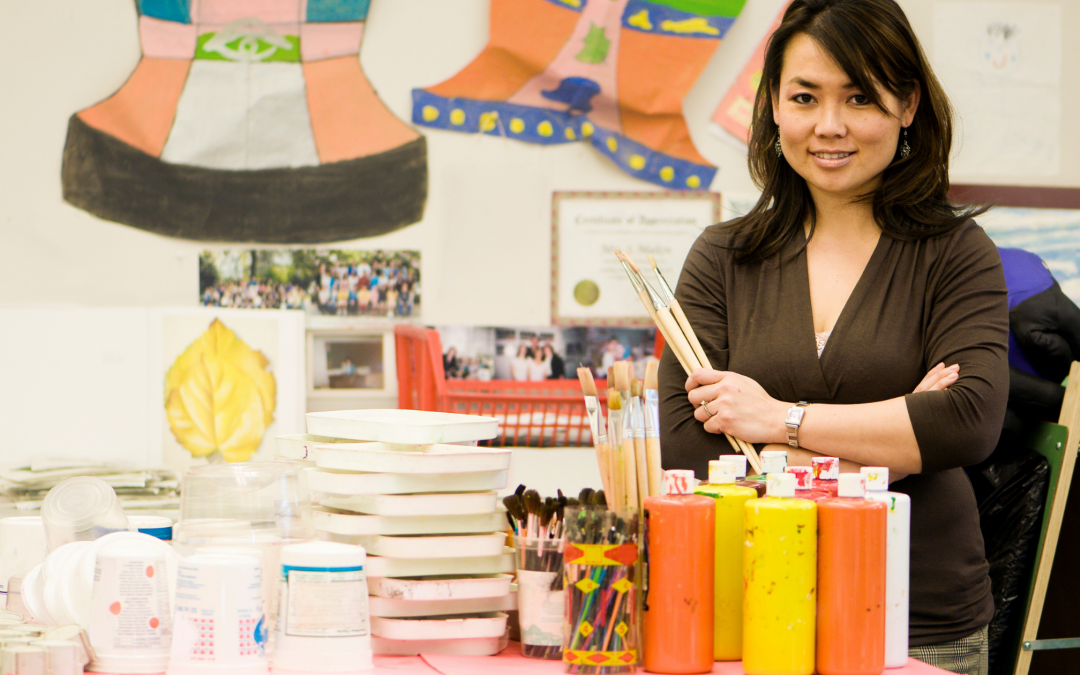
One of your most potent tools as a teacher is creativity. The Montessori method can be compared to an artist crafting a masterpiece. Except here, the canvas is the classroom, and your colors are as diverse as academic subjects and artistic explorations. This approach fills your classroom with more than just facts and figures; it brings harmony, curiosity, and innovation, crafting a vibrant learning atmosphere that resonates with every child’s creativity.
Central Components of Montessori Arts Integration
The Prepared Environment
Picture this: A child in your classroom randomly reaches out for a paintbrush during a botany lesson, carefully observing an array of seasonal flora to paint. The materials for their art are easily accessible, promoting self-initiated exploration. This is the Montessori classroom where the art station lives beside the study area—open, inviting, and integrated. Observing the learners in this environment, engaging freely in their chosen artistic pursuits, validates the efficacy of this approach.
Freedom with Structure
Recall when a student approached you, stuck with a clay sculpture she was trying to mold. You could have easily shown her the way. Instead, you offered her a few options, encouraging her to find the solution. This was you offering a subtle structure–a gift of guidance wrapped in layers of freedom, embodying the tenets of the Montessori philosophy.
The Role of Direct and Indirect Teaching
Remember those art lessons where you taught your students different painting techniques, from frescos to pointillism? It was direct instruction, a necessary part of nurturing an artist. But then, you also remember holding back, letting your pupils immerse themselves in their chosen art forms while you silently observed and supported them when asked. This careful balance between direct and indirect teaching is the essence of the Montessori approach to arts integration.
The Impact of the Montessori Approach on Child Development
1) Developing Sensory Skills and Coordination
You’ll forget the excitement in your third-grade student’s eyes when her tiny fingers finally mastered using scissors to create a perfect collage. This is the art curriculum developing her fine motor abilities—constructive art activities refining her motor skills, one piece of cut-out paper at a time.
2) Fostering Self-expression and Emotional Skills
When your classroom became a theater, and students relieved stories through dramatic expressions, you felt the spectrum of emotions they conveyed. This was their language of art speaking, offering insights into their feelings and perspectives and validating the power of art in enunciating emotional and social learning.
3) Promoting Cognitive Development
When you challenged your students to create a scene from the Civil War using cardboard and paint, you led to a delightful chaos of creativity. You saw them brainstorm, make decisions, and solve creative problems—this artistic integration breathed life into cognitive learning.
The Montessori Approach in Practice
To embrace the Montessori method means your algebra class can become Picasso’sPicasso’so as you introduce geometric shapes through Cubist art. It implies mixing history and pottery, where your students make terracotta soldiers while learning about the Qin Dynasty. The time when children showed the life-cycle of a butterfly through interpretive dance—these aren’t whimsical fantasies; these are Montessori-endorsed realities fostering a vibrant, interconnected learning environment.
The Montessori approach serves as a beacon for the teachers eyeing this artistic confluence in their classrooms. It helps you create a learning space that echoes with laughter and hums with curiosity—a place where education is a fine blend of creativity and academics. As you weave together the worlds of arts and academics for your students, you see them evolve—individually and collectively. And it’s not just the artistic techniques they imbibe or the hard facts they remember, but the harmony they grasp in the interplay of learning and creativity. This method has a profound impact, shaping students into thinkers, dreamers, and innovators, preparing them for a world that values their capacity to create as much as their ability to learn.
 Author bio
Andrea Gibbs is the Content Manager at SpringHive Web Agency, where she helps create content for their clients’ blogs and websites. She is currently a blog contributor at Montessori Academy, a blog dedicated to helping parents with the ins and outs of parenting children within the Montessori tradition. When she isn’t writing, she enjoys spending time with her family and her dog.